
Renewable hydrogen as a driver for energy autonomy and industrial decarbonization
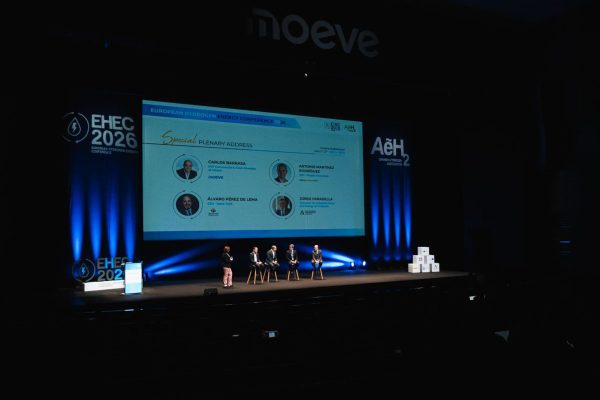
25 de March de 2026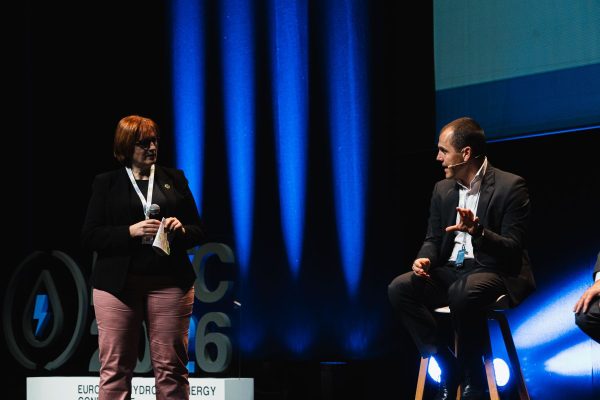 Antón Martínez, CEO of Enagás Renovable, participated in the European Hydrogen Energy Conference (EHEC) 2026, where he highlighted the critical role of large-scale projects in consolidating Spain’s position as a European leader in green molecules.
At Enagás Renovable, we reaffirm our commitment to the real-world deployment of the hydrogen economy. During his intervention, Antón Martínez shared lessons learned from pioneering projects such as the one in Mallorca, emphasizing that the success of these initiatives lies not only in production technology but in their design as complete ecosystems. For hydrogen to move beyond the pilot phase, it is imperative to align industry, infrastructure, regulation, and demand from the outset.
From demonstration to industrial scale
The operational experience accumulated by Enagás Renovable is a key differentiator. “Scaling hydrogen requires learning from real projects, not just engineering studies” Antón noted.
After establishing itself as a pioneer in the sector, Enagás Renovable is taking a decisive step toward developing large-scale projects such as Onuba, for which the final investment decision was recently made. This initiative, considered the largest renewable hydrogen project in Southern Europe, will have an initial capacity of 300 MW, expandable by an additional 100 MW. This is a strategic project for the decarbonization of hard-to-abate sectors, such as refineries and heavy industry, whose operations depend on the use of molecules.
In addition to decarbonization, the development of domestic renewable molecules is a strategic piece for energy autonomy. With Spain’s current energy dependency at 68%, locally produced hydrogen helps reduce vulnerability to external geopolitical tensions and strengthens security of supply.
 Synchronization with european infrastructure
A central point of the debate was the necessary coordination between production projects and transport infrastructure. At Enagás Renovable, we emphasize that anchor projects like Onuba provide visibility to the planning of the Hydrogen Backbone (the hydrogen trunk network) promoted by Enagás. This infrastructure, which includes European corridors such as H2med, positions Spain as an essential connection node for the European Union’s energy market.
Finally, Antón highlighted the social and regional dimension: “Projects must generate employment, industrial activity, and value within the territory to ensure long-term acceptance”. In this sense, integration into hubs like the Andalusian Green Hydrogen Valley not only protects current industrial competitiveness against European regulations but also attracts new investments to the Autonomous Communities.
With this vision, Enagás Renovable continues to drive the transition towards a more sustainable, secure, and competitive energy system, transforming Spain’s renewable potential into a tangible industrial reality.